Rotational Bughouse960
Even Magnus Carlsen is bored of chess.
Having universally defeated his competition at every speed and tournament format, the world champion vacated his title to give someone else a shot. The man has said he "doesn't particularly like it" and is "not motivated to play another match". While maintaining a partial presence on the traditional chess tour, Magnus has been a staunch advocate of Chess960, a randomized chess variant.
We are not the world champion, but the same rot affects our games. Have you ever seen chess played as a party game? Even a group of devoted nerds will rarely chug a few beers and play blitz.
Let's do better than Magnus. I'll show how we can make chess fun again, two boards at a time.
Standard Chess: Quiz Bowl
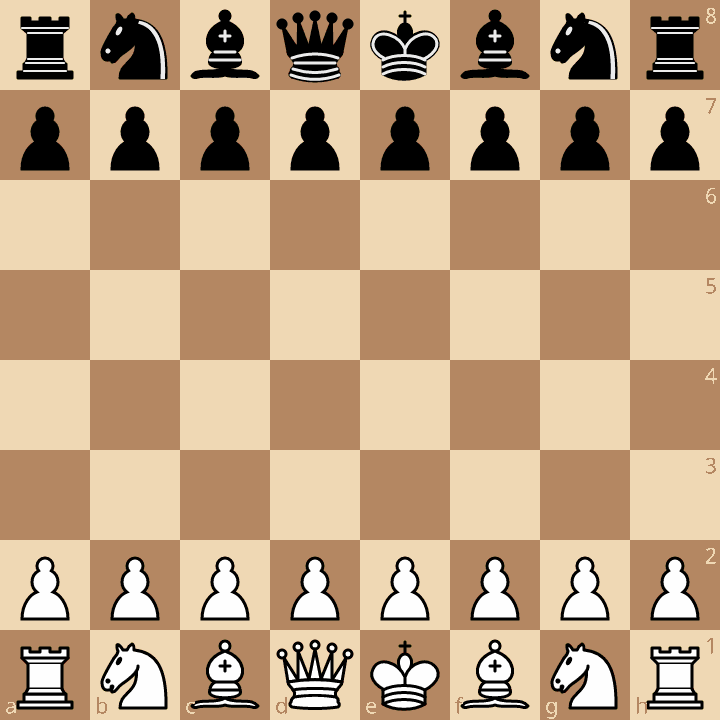
Poker is fun because a bad player can accidentally win for an evening. Chess offers no such mercy.
Chess is a perfect information game with a delicious strategic patty sandwiched between two buns of tedious grind.
Centuries of analysis have simultaneously narrowed and deepened the feasible opening game tree. Elite-level players drag a team of helpers around to prepare thousands of lines that are safe for them but treacherous for opponents.
On the other end, endgames have a richness of strategic depth and (mostly) cannot be directly memorized. Instead, feel free to sit at the table for back-and-forth maneuvering that can last hundreds of moves. The pickleball to exciting chess tennis.
Chess960: Look Ma, no Openings
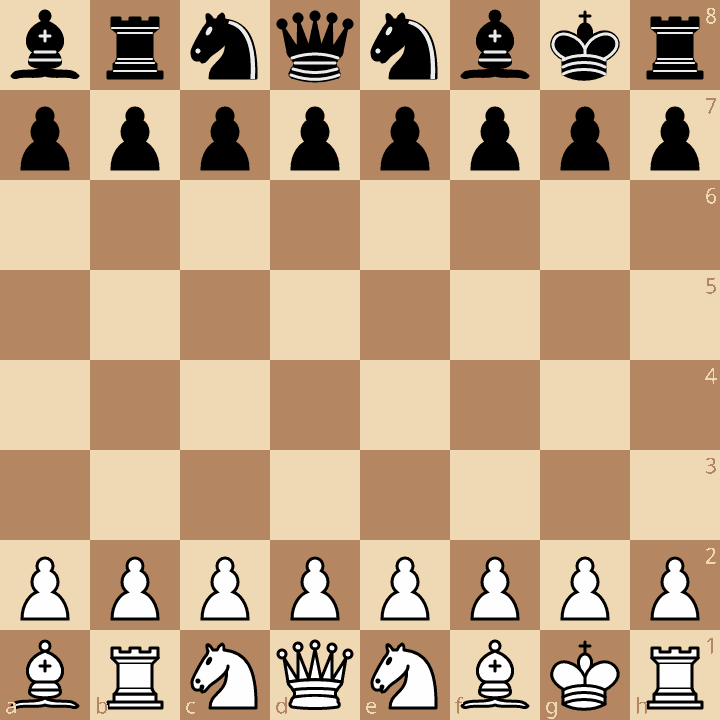
Magnus was onto something. The new craze among the chess elite is rolling the dice (sometimes literally) to randomize their first row of pieces. With various small constraints for playability, this allows for 960 possible starting positions; hence the name Chess9601.
This renders opening theory obsolete. We're forced to think from move one, unless we are sufficiently obsessed to prep nine hundred sixty times. We maintain parity by mirroring the starting position across the central horizontal axis.
However, the initial perturbation isn't enough to prevent endgames, and the overall ruleset doesn't fix the brutality of the perfect-information one-on-one. The game can drag on, and the better player almost always wins.
In the unlikely event that you play chess and have friends, how can you rope them in?
Bughouse: The Social Fix
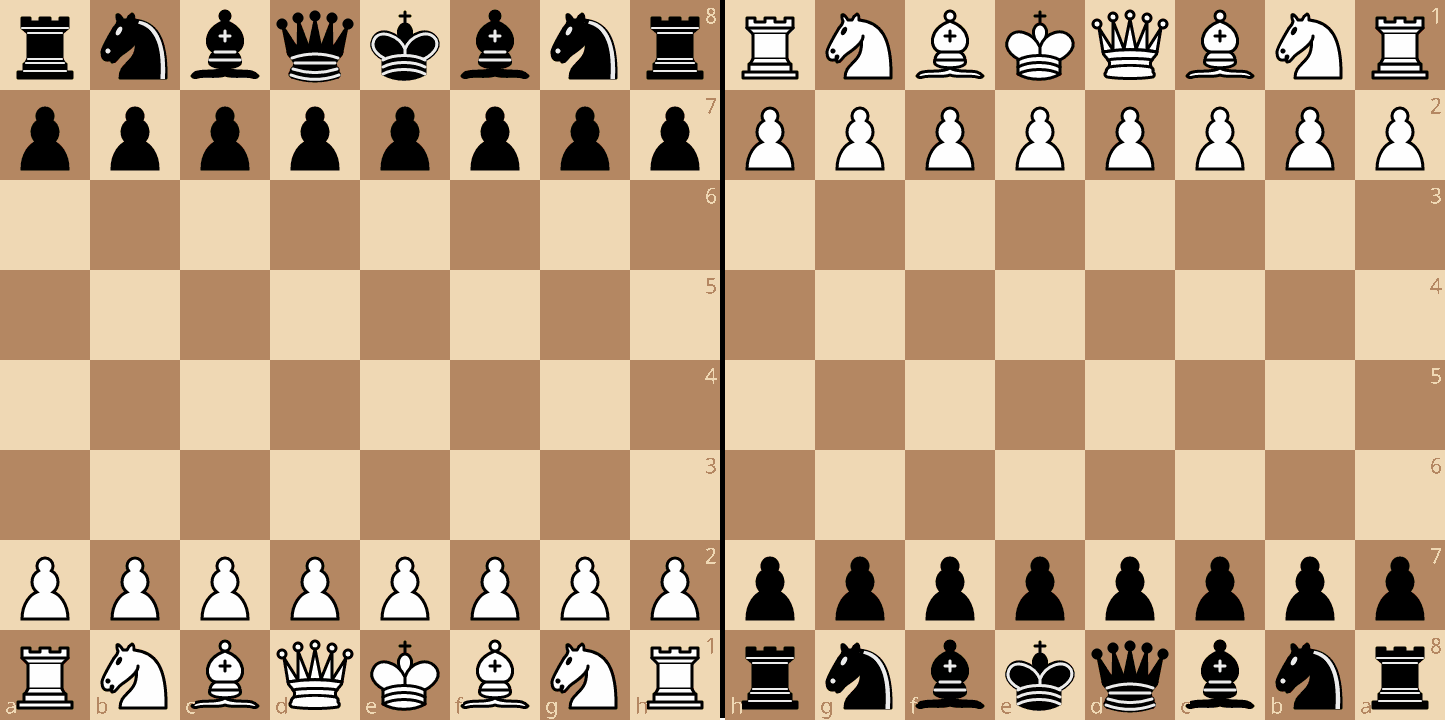
Assembling two boards and two sets together, we construct a bicameral conservation where pieces captured by each player are passed to their teammate sitting alongside. The teammate can "drop" the received piece anywhere they'd like as a move. This element forces players to talk, and also makes the game wildly entertaining for spectators.
Piece values flatten from 1/3/3/5/9 to roughly 1/2/2/2/4. Sacrificing feels cheap, and bughouse is bad training material for standard chess. The game is the bane of chess coaches, because it is too fun and too different. Instead of reviewing their preparation or getting rest in between games, a universal sight at youth chess tournaments is kids gathered in the break room playing bug until the next round. They can squeeze a game in even with a few minutes, as the aggressive nature of bughouse rarely allows games to drag past 20-30 moves.
Yet, at the highest levels, bughouse is prone to severe opening problems. The square directly southeast of the black king - f7 - is a common weak point which is hard to access in standard chess but trivial to attack with drops.
So, if we'll allow two boards and interdimensional portals, let's shake things up a touch more...
Rotational Bughouse960
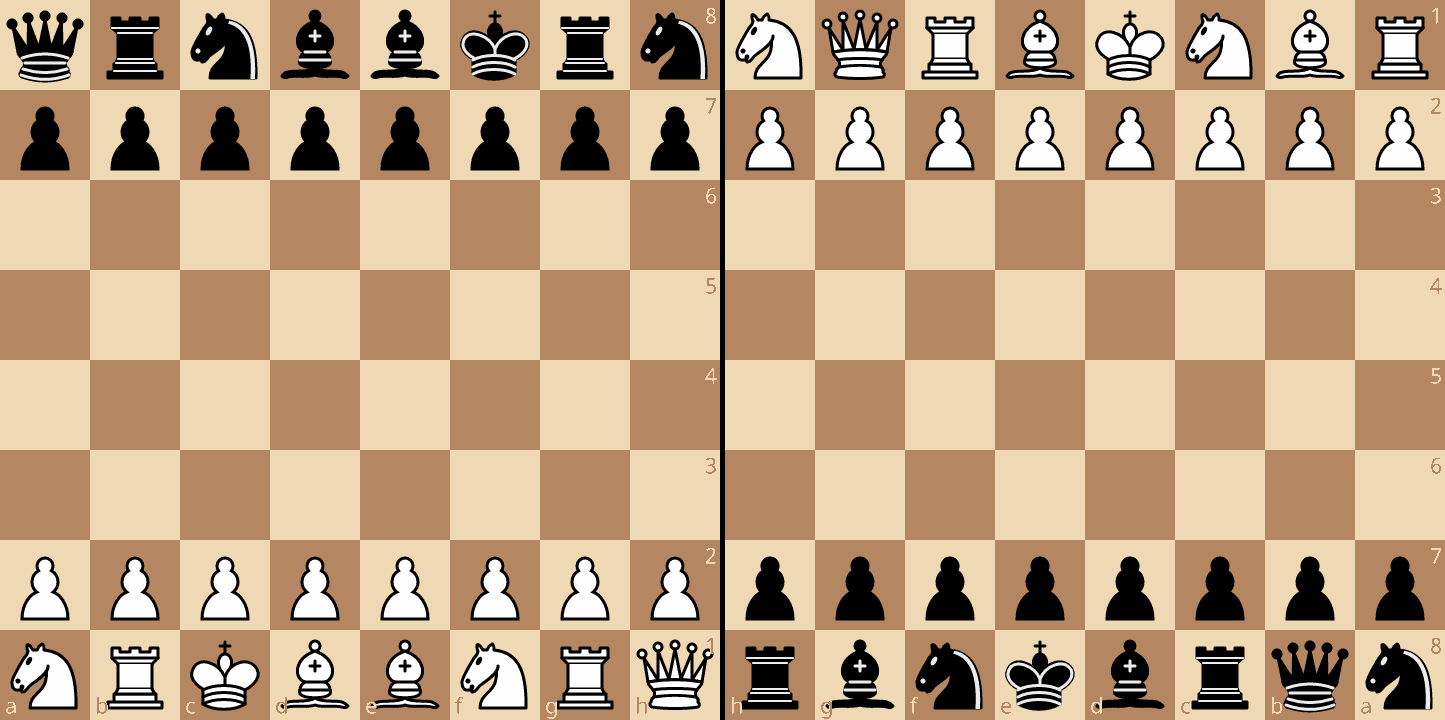
The one true social chess variant.
If random chess good and team chess good, then random team chess better? The two modifications complement each other perfectly. Chess960 eliminates openings, and Bughouse eliminates endgames and downtime.
Since direct symmetry rapidly erodes with the addition of dropped pieces, we can shift each board's symmetry axis from horizontal to rotational. In this way, both players can still set up based on the same randomized position index, but the pieces down the same column don't match, leading to dynamic pacing. In the example starting position, the left board sees heavy pieces (Queen, Rook) on the king side of the board, likely leading to a rapid pawn storm.
Speaking from experience, rotational Bughouse960 moves chess more towards poker in randomness and allows players of varying skill levels to compete together. Even when the two teams vary in average ELO by an amount that would suggest a 90%+ winrate, the weaker team can often get a crazy checkmate going on their white board. Setup and play are quick, vibes and novelty immaculate.
For an extra challenge, remove the two extra players, and play one-on-one. Both players manage two boards each, struggle to keep up with pieces, and even titled masters make instant game-ending mistakes. Try it on your next high-amphetamine day!
Also known as "Fischer Random Chess" or "Freestyle Chess"↩